

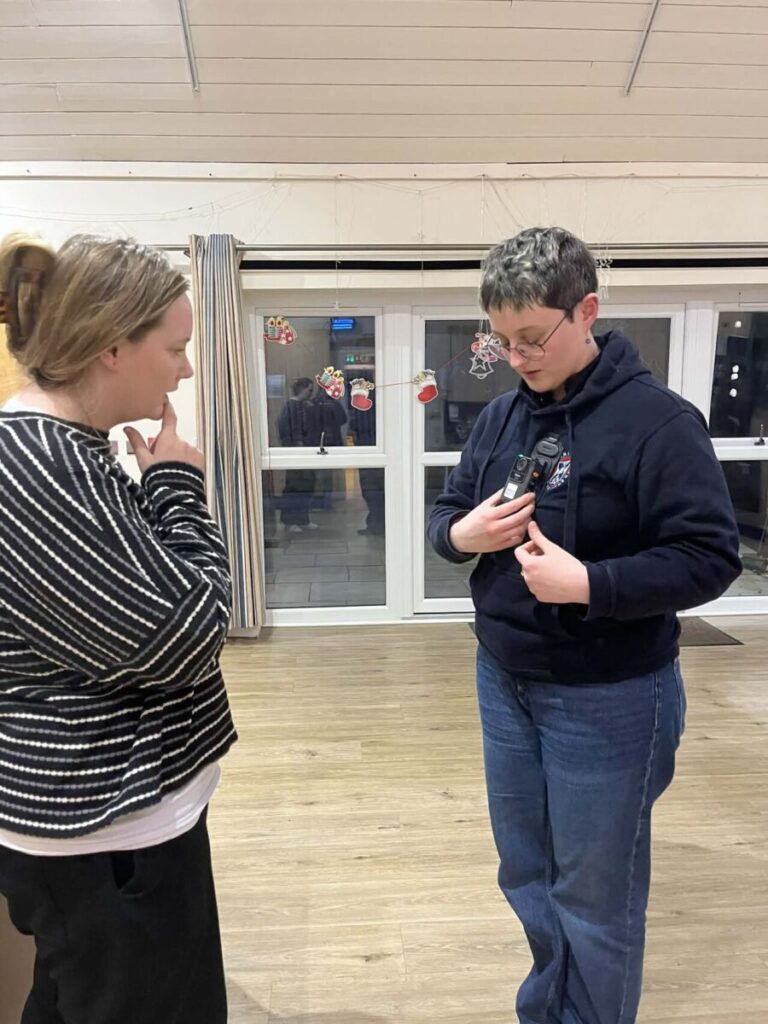
Innovation is central to delivering outstanding specialist support at Home From Home Care. Recently, HFHC partnered with Carpe Care on a pioneering pilot project exploring how wearable camera technology could improve epilepsy care.
Carpe Care is an exciting care-tech startup using carer-worn video technology to capture neurological events and securely share footage with clinicians. This helps improve diagnosis, safety and understanding of seizure activity.
A groundbreaking data-informed approach
This highly specialist tech reflects Home From Home Care’s commitment to a groundbreaking data-informed approach – ‘The World On My Terms’ – where paperless processes, data insights and personalisation at all levels support the delivery of outstanding care and positive outcomes.
The three-month pilot saw carers wearing body cameras during shifts to capture seizure activity in real time. For clinicians, this visual evidence can provide valuable insight and support more informed treatment decisions.
The project focused on an individual supported by HFHC who had recently experienced an increase in seizures. Traditionally, records relied on written observations, but during the pilot carers were able to capture footage of a witnessed seizure. This recording was then shared with the individual’s neurologist and helped to confirm the seizure type directly from visual evidence. Prior to the pilot going ahead, a best interest process was followed with the individual’s family and commissioning authority.
An exciting care-tech partnership
Anna O’Gara, Carpe Care’s Founder, described the collaboration as an opportunity to “connect care with clinical insight by capturing neurological events with hands-free video and sharing securely with clinicians.”
Reflecting on the partnership, she added: “The whole team were so engaged and interested to try out the system,” describing HFHC as “such an innovative and technology confident organisation.”
She also praised “the management and support team who were directly involved in operating the equipment, collaborating with the Carpe Care team, and providing thoughtful feedback.”
Strengthening communication
While the pilot highlighted some practical challenges around camera ergonomics and software compatibility, it also demonstrated the potential for wearable technology to strengthen communication between care teams and clinicians.
HFHC colleagues embraced the technology positively, with training and digital confidence helping the system integrate into day-to-day support. The project also sparked important conversations around ethics, dignity, privacy and how technology can be introduced thoughtfully within care environments.
This pilot marks an important step forward in using technology to improve clinical insight, strengthen record keeping and enhance outcomes for people living with epilepsy.